Feed Solutions for Modern Animal Nutrition | Camlin Fine Sciences
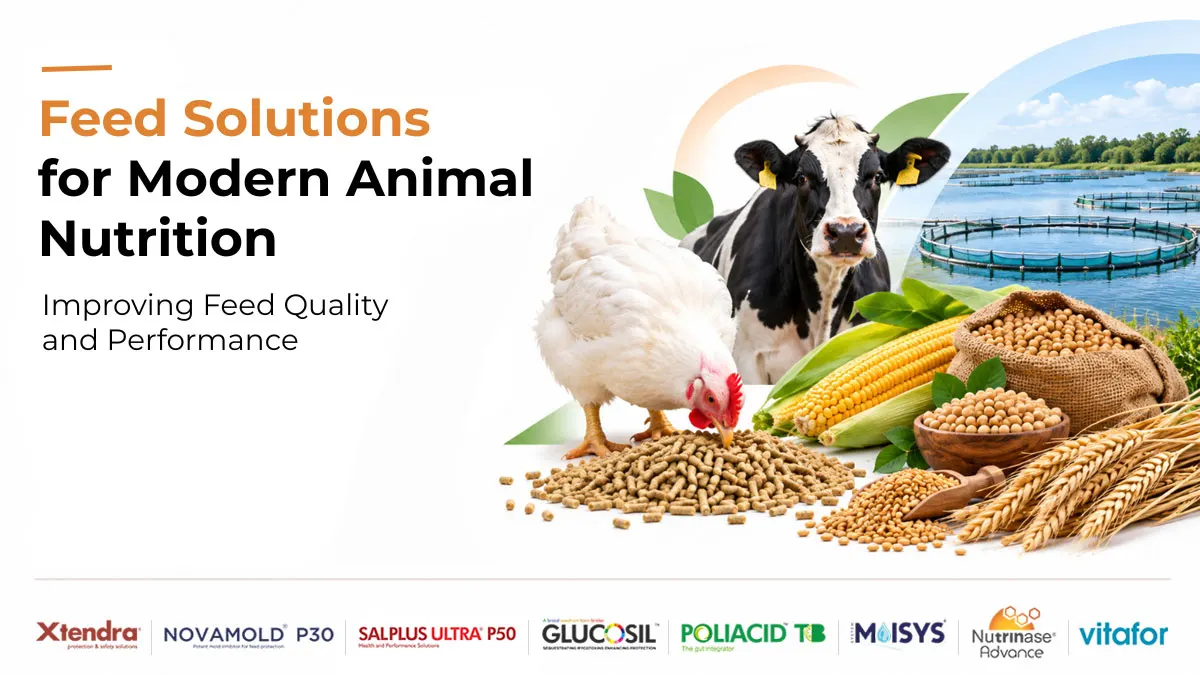
Advanced nutritional formulation technologies ensure every particle of feed delivers balanced, highly bioavailable nutrition considering specific growth stages of Birds and different segments. By integrating targeted feed additives such as acidifiers, Feed sanitizers, toxin binders, Enzymes, Gut integrity products help significantly boost animal health while reducing dependency on antibiotics
The modern feed technologies emphasize delivering following feed innovations:
- To Enhance nutrient availability by unlocking trapped nutrient energy and minerals from raw materials
- To improve gut health & immunity support by strengthening gut integrity and minimizing disease risks
- Environmental & Cost efficiency by minimizing nutrient waste & pollution
- Superior product quality for getting best high-quality yields from birds
In addition, feed quality contributes to sustainability. Better nutrition utilization can help reduce feed wastage, nitrogen excretion, and production costs. As a result, it becomes essential for feed manufacturers to produce diets that are naturally effective, safe, stable, and economical.
Feed manufacturers often focus solely on nutritional formulation, which isn’t enough. As it describes only what nutrients are present, it does not guarantee that animals will consume, digest, absorb, and effectively utilize them. That’s where specialized feed solutions help; these custom-designed feed solutions help in making exact feed based on animal needs.
What Are Feed Solutions?
Feed solutions are animal nutrition products, components, and technologies designed to optimize animal growth, health, and productivity. The key elements of these solutions include feed additives, nutritional premixes, and other feed protection solutions.
These solutions design feeds that support animals in absorbing nutrients and help them in growth phases, while protecting the feed from spoilage and waste. Consistent use of feed solutions ensures animals receive balanced nutrients at every feeding, maintaining consistent quality ensuring welfare of animals.
Why Feed Quality Matters in Animal Nutrition
In animal production, feed costs can account for up to 70% of total production costs. The feed quality is much more than only meeting nutrient specifications. It means supplying feed that remains safe, stable, uniform, digestible, and effective from production through storage to animal consumption.
High-quality feeds provide nutrient stability while ensuring that every batch has a uniform nutrient composition. The formulation is specifically designed to improve digestibility and nutrient utilization.
It helps animals get the nutrients they need for growth and converts feed into more meat, milk, eggs, and other products. Better feed quality reduces nutrient losses, wastage, and performance problems, improving the cost-effectiveness of animal production.
Major Challenges Affecting Feed Quality
Feed production goes through several stages, from raw material handling and processing to storage and transportation. This entire process brings several challenges in maintaining feed quality. Here are a few key challenges:
Oxidation of Fats and Oils
Fats and oils are valuable and key ingredients in feed, but they also oxidize easily. The oxidation destroys fatty acids and vitamins. They produce toxic peroxides, which cause foul odors and bad taste. Moreover, it can also gut inflammation in animals.
Mold and Fungal Growth
Moisture, poor drying, condensation, high storage humidity, and improper ventilation can create conditions that allow fungi and mold growth in feed. These molds and fungal growth reduce nutrient quality and increase spoilage.
Mycotoxin Contamination
Mycotoxins are toxic compounds produced by molds that contaminate ingredients such as maize, wheat, barley, oilseeds, and other raw materials. Mycotoxin can still be present even with no visible mold. Depending on the toxin and exposure level, this contamination can negatively affect animal health, immunity, growth, and production performance.
Microbial Contamination
Finished feed and feed ingredients can become contaminated with microorganisms through raw materials, poor hygiene practices. This contamination can affect feed safety and shelf life and may pose risks to both animal health and the wider production chain.
Pellet Quality and Feed Processing
The production process directly influences the physical and nutritional quality of finished feed. Grinding, mixing, conditioning, pelleting, cooling, and drying must be properly controlled to get consistent results. Poor pellet quality can lead to excessive fines, nutrient variation, dust, and feed wastage. Besides, excessive heat or inappropriate conditions can damage heat-sensitive nutrients and reduce their availability.
Storage and Transportation
Changes in temperature, humidity, moisture, storage duration, handling, and transportation conditions can affect feed quality and stability. Poor storage can lead to moisture migration, mold growth, oxidation, insect infestations, and more. Hence, proper warehouse management, stock rotation, packaging, and transportation practices are essential.
Types of Feed Solutions for Modern Animal Nutrition
To overcome the above-mentioned challenges, feed manufacturers adopt various feed additives and nutritional solutions to protect nutrients, manage quality risks, and support consistent animal performance.
Antioxidants
Antioxidants help protect fats, oils, vitamins, and other oxidation-sensitive nutrients from oxidation. They slow down oxidation and help maintain nutrient stability, feed freshness, taste, and shelf life. These additives are majorly important for feed containing higher levels of fats and oils.
Mold Inhibitors
Mold inhibitors prevent the growth of molds and fungi in feed and pellet feed, especially when moisture and storage conditions increase the risk of mold growth. These mold inhibitors protect feed from molds , microbes and prevents the feed spoilage.
Feed Sanitizers
Feed sanitizers are powerful antimicrobial solutions that help to manage microbial contamination in feed and feed ingredients. Depending on the products, these sanitizers can help maintain feed hygiene throughout manufacturing and storage.
Toxin Binders
Toxin binders help manage risks associated with multiple mycotoxins that may be present in feed ingredients. Their effectiveness can depend on the mycotoxin , binder composition, inclusion level, and feed matrix.
Pellet Binders
These additives help to improve the physical strength and durability of feed pellets. Good pellet quality helps reduce fines, dust, segregation, and feed wastage while improving handling and transportation characteristics. In addition, consistent pellet quality also helps ensure that animals receive a more uniform supply of nutrients.
How to Select the Right Feed Solution
Choosing the right feed solution depends on various factors, including the type of feed, production process, raw materials, storage environment, and biological needs. Here are the key factors to consider before choosing the right feed solution:
- Animal species: Different animals have different nutritional requirements, digestive systems, and feed intake. A solution that works for poultry may not work for cattle. Therefore, it’s essential to consider the animal category when selecting a feed solution.
- Feed formulation: Includes fat and oil levels, moisture percentage , energy value, fiber content, crude protein, minerals, and amino acid profile. The selected feed solution should complement the existing formulation without compromising feed quality, nutritional value, or overall feed performance.
- Feed formulation: Contains fat and oil levels, moisture, protein sources, fiber content, and inclusion of sensitive nutrients can affect feed stability and additive performance. The chosen solution should complement the formulation without affecting feed quality.
- Raw materials: Raw materials with a higher risk of oxidation, mold growth, mycotoxin contamination, or nutrient variation require targeted quality management solutions.
- Processing conditions: Feed processing significantly influences additive performance and nutrient stability. Grinding, mixing, conditioning, pelleting, and other steps should be considered while choosing the solution.
- Storage conditions: Consider the expected temperature, humidity, moisture exposure, storage duration, packaging, and transportation conditions to determine the risk of feed deterioration. Feeds stored in hot or humid environments may require stronger protection against oxidation, mold, and other quality risks.
- Specific feed challenge: Manufacturers should closely analyze and first identify the primary challenge. Whether it’s oxidation, mold, nutrient instability, or another feed quality issue. Proper analysis allows for a more targeted and cost-effective solution.
- Regulatory requirements: The feed solution must always match the applicable regulations and permitted-use requirements. In the target market. Manufacturers should verify that ingredients are approved, permitted inclusion levels are met, labeling requirements are met, claims are substantiated, and documentation is in order before using a product in commercial feed.
Building an Integrated Feed Quality Strategy
Feed quality cannot be achieved without proper ingredients, processing, storage and quality control. Manufacturers require an integrated quality strategy that helps to analyze risks at every stage of the feed production chain. This entire strategy can be divided into 7 steps:
Knowing the raw material
Manufacturers should closely analyze the nutrient composition, moisture, contamination risks, oxidation status, and physical quality of raw materials before they enter production. This routine steps helps reduce variability at the beginning of the process.
Formulation
Using the raw material analysis, the formulations should be designed according to the animal category, biological need, and nutritional requirements to create an accurate formula that delivers the intended nutritional solution.
Processing
Standardize the parameters for grinding, weighing, mixing, conditioning, and other procedures. Regularly monitoring processing points helps maintain nutrient uniformity, minimize damage, and prevent contamination between batches.
Storage
Temperature, humidity, moisture, ventilation, pests, and storage duration should be closely monitored to maintain controlled storage conditions. Based on that, they should use a suitable packaging, maintain proper stock rotation, inspect stored feed regularly, and take action if any condition could cause deterioration.
Transportation
Choose transportation methods and requirements that protect feed from moisture, heat, contamination, pests, and physical damage. Use clean vehicles and containers, appropriate packaging, controlled loading and unloading practices, and document checks throughout transportation for a better understanding.
Finished Feed
After each batch is finished, verify the defined nutritional, physical, safety, and quality specifications. Using representative sampling and appropriate testing, compare the results with the earlier specifications and release the feed that meets the required quality standards.
Camlin Fine Sciences' Feed Solutions
Camline Fine Sciences helps animal-feed manufacturers to develop safer, more stable, and higher-performing nutrition products. We offer feed solutions to manage oxidation, mold growth, mycotoxin risks, poor pellet quality, nutrient losses, and rising production costs.
Our animal feed solutions help manufacturers develop feed for various species, including poultry, cattle, swine, goats, sheep, and aquaculture. Through our technical expertise and application-focused solutions, we help businesses protect product quality while supporting animal health and productivity.
We collaborate with feed manufacturers to identify the right solution for each formulation, animal species, production stage, and storage condition. With our technical expertise, we help them choose the right feed solution across categories such as antioxidants, gut-health solutions, enzymes, mold inhibitors, and more.
Conclusion
Feed quality determines feed stability, efficient nutrient utilization, consistent animal performance, and better production outcomes. Hence, it’s necessary to have an integrated approach that helps to identify and address quality risk throughout the feed manufacturing process. When formulation, processing, protection, storage, and transportation are closely observed and controlled together, feed quality and stability can be managed more consistently, and improve the feed’s overall shelf life and results.
FAQs
How can CFS help me improve the stability of my animal feed?
CFS offers feed-additive solutions designed to support feed quality and stability, and to address specific issues across different phases of animal production. Our portfolio includes antioxidants, mold inhibitors, enzymes, feed protection solutions, toxin binders, and acidifiers.
What are feed solutions?
Feed solutions are products, technologies, and strategies used to improve animal nutrition, feed quality, stability, and overall performance.
What are feed additives?
Feed additives are special ingredients added to animal feed in small quantities to support specific functions, such as improving nutrition, maintaining feed quality, improving digestion, protecting feed from oxidation, or improving animal health and performance.
Why are antioxidants used in animal feed?
Antioxidants work as feed protectors. They slow down the oxidation process, which is often the key cause of foul smell and reduced nutritional quality in animal feed. They help maintain feed freshness, nutritional value, stability, and shelf life during storage and transportation.
How can feed quality be improved?
Feed quality can be improved by developing a well-integrated feed strategy that includes selecting the right raw materials, balanced formulation, effective processing, appropriate additives, and more. An integrative approach helps maintain feed quality from raw materials to finished feed.
What factors should manufacturers consider when selecting feed additives?
Before selecting feed additives, manufacturers should consider factors like intended function, effectiveness, stability, compatibility with other ingredients, dosage requirements, feed processing conditions, storage requirements, safety, regulatory compliance, and overall cost effectiveness