
Antioxidants in Food and Industry
A Procurement Guide to Selecting the Right Antioxidant System
Powered by Camlin Fine Sciences | Xtendra® Protection And Safety Solutions
This guide is designed to help procurement professionals and R&D teams understand antioxidants in food and industrial applications, evaluate selection criteria, and navigate industry-specific needs, with Camlin Fine Sciences’ Xtendra® serving as a comprehensive antioxidant solution across diverse industries.
What Are Antioxidants and Why Do They Matter in Food and Industry?
Antioxidants are substances that inhibit oxidation which is a chemical process triggered by oxygen, heat, light, or metal ions. In simple terms, Antioxidants act as electron donors, neutralizing free radicals before those radicals can cause molecular damage.
Food Applications
How Traditional (synthetic) Antioxidants Protect Food and Feed.
The Oxidation Mechanism
Stability and Shelf Life
Procurement Checklist: Selecting the Right Antioxidant System
Product Type and Matrix
- Whether the substrate a fat, oil, protein, starch, or synthetic polymer.
- The expected processing temperature and method.
- Aqueous, lipid-based, or emulsified products.
Oil/Fat Content and Oxidation Sensitivity
- High unsaturation (e.g. fish oil) requires more robust antioxidant protection.
- Saturated fats more stable but benefit from antioxidant coverage during high-heat processing.
Shelf Life Requirement
- Target shelf life for food or industrial product.
- Ambient, chilled, or frozen distribution.
Regulatory Compliance
Natural vs. Synthetic Requirement
Cost-Performance Balance
Supplier Qualification
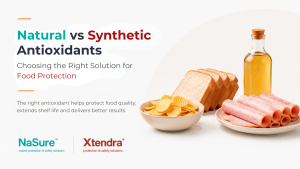
Natural vs. Traditional (Synthetic) Food Antioxidants: What Procurement Teams Need to Know
| Criteria | Synthetic Antioxidants (BHA, BHT, TBHQ, PG) | Natural Antioxidants (Tocopherols, Rosemary extract, green tea extract and acerola extract) |
|---|---|---|
| Performance at High Heat | Excellent, heat-stable up to frying temperatures. | Variable, tocopherols stable; rosemary extract degrades at very high temperatures. |
| Clean Label Acceptance | Not accepted, must be declared on label, chemical name or E-number. | Accepted, listed as natural ingredient or vitamin E. |
| Regulatory Status | Permitted in most markets with defined limits | GRAS in US; approved under EU food additives regulation |
| Cost | Lower per unit of activity. | Higher, but improving with scale and extraction technology. |
| Application Range | Wide, especially effective in fried and processed food. | Broad, best in oils, dairy, meat, and functional foods. |
| Labelling Impact | Requires E-number or chemical name declaration. | Permitted as 'natural antioxidant' or 'tocopherol' in most markets. |
Industries Served by Camlin Fine Sciences Antioxidants
Food & Beverages
Petfood & Rendering
Petfood formulations, especially those containing animal fats and fish oils, are highly susceptible to oxidative degradation. Rendered materials used as feed ingredients require robust antioxidant stabilization during processing and storage.